
BepiColombo Mercury Orbit Insertion
Countdown Timer - BepiColombo Mercury Orbit Insertion
Frequently Asked Questions
There are exactly 57 days left until BepiColombo Mercury Orbit Insertion, which is 1376 hours or 82619 minutes.
BepiColombo Mercury Orbit Insertion will take place on Monday, November 30, 2026 at 12:00 AM.
Use our real-time countdown to precisely track the time remaining until BepiColombo Mercury Orbit Insertion.
Space articles
All articles →
Related countdowns
See more space
Falcon Heavy | NROL-97
Launch by SpaceX. Classified payload for the US National Reconnaissance Office. From Kennedy Space Center, FL, USA.
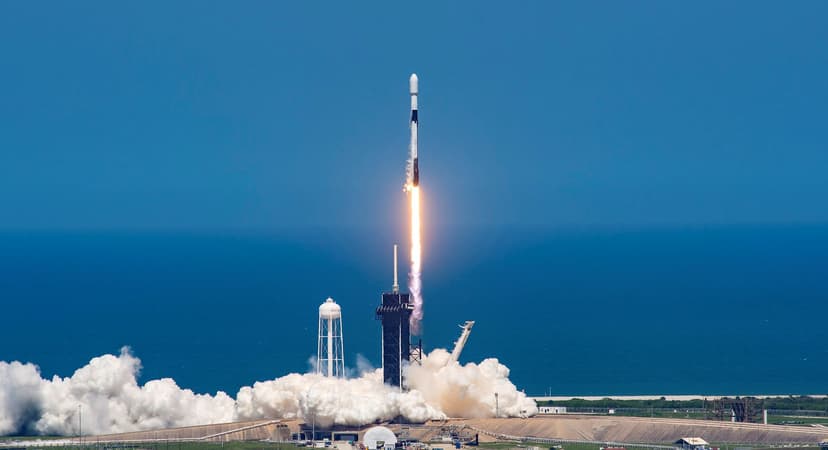
Falcon 9 Block 5 | SDA Tranche 1 Transport Layer A
Launch by SpaceX. Tranche 1 Transport Layer A is one of six missions by the United States Space Force Space Development Agency (SDA) for the Proliferated Warfighter Space Architecture (PWSA) Tranche 1 Transport Layer constellation, which will provide assured, resilient, low-latency military data and connectivity worldwide to the full range of warfighter platforms from Low Earth Orbit satellites. The constellation will be interconnected with Optical Inter-Satellite Links (OISLs) which have sig

SpaceX Crew-12 Crew Dragon Undocking
The Crew-12 Crew Dragon will undock from the International Space Station, carrying four astronauts. It will then reenter the Earth's atmosphere and splashdown in the Pacific Ocean. Location: International Space Station.

Nuri | NeonSat-2 to 6
Launch by Korea Aerospace Research Institute. NeonSat-2 to 6 are part of the South Korean government's Earth observation micro-satellite constellation NeonSat (New-space Earth Observation Satellite). The NeonSat constellation is the first satellite system developed by the government using a mass-production approach for precise monitoring of the Korean Peninsula. From Naro Space Center, South Korea.

NG-24 Cygnus Release
The Northrop Grumman NG-24 Cygnus will be unberthed from the ISS before initiating a destructive reentry into the Earth's atmosphere taking waste along with it. Location: International Space Station.
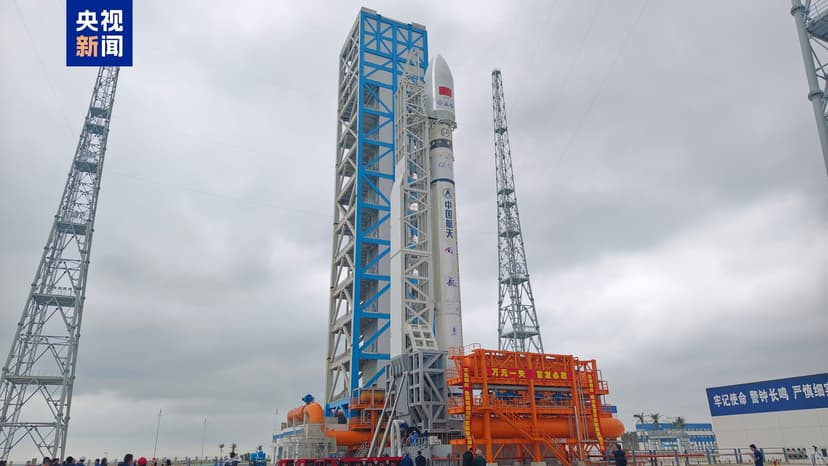
Long March 12 | Unknown Payload
Launch by China Aerospace Science and Technology Corporation. Details TBD. From Wenchang Space Launch Site, People's Republic of China.