
Falcon 9 Block 5 | NROL-136
Countdown Timer - Falcon 9 Block 5 | NROL-136
Frequently Asked Questions
There are 8 days left until Falcon 9 Block 5 | NROL-136, which is 198 hours or 11883 minutes.
Falcon 9 Block 5 | NROL-136 will take place on Saturday, November 21, 2026 at 12:30 PM.
This page shows the time left until Falcon 9 Block 5 | NROL-136 live, down to the second. You can also set a reminder or show it full screen.
Click “Embed” under the countdown and copy the code or link: the Falcon 9 Block 5 | NROL-136 countdown widget works on any website, blog, Notion page or OBS stream and updates live. It's free, with no sign-up.
On the TV, open the browser and type wiu.app: a code appears. On your phone, tap “On the TV” under the Falcon 9 Block 5 | NROL-136 countdown and enter the code, or scan the TV’s QR code: the countdown fills the screen. Nothing to install, free, on Google TV, Samsung, LG, Fire TV or a game console. Illustrated guide
Space articles
All articles →
Related countdowns
See more space
Falcon 9 Block 5 | USSF-627
Launch by SpaceX. A classified mission for the United States Space Force. It is possibly a batch of classified LEO satellites based on SpaceX’s Starshield satellite bus, based on locations of rocket stage drop zones being exact fits with previous Starlink Group 15 launches. From Vandenberg SFB, CA, USA.

Kuaizhou 11 | Unknown Payload
Launch by ExPace. Details TBD. From Jiuquan Satellite Launch Center, People's Republic of China.

Mir | Demo Flight
Launch by Agency for Defense Development. Note: Launch vehicle name is provisional. First orbital full version launch of the South Korean military small satellite launch vehicle, after 2 sub-orbital tests of individual stages on 30 March and 30 December 2022, and 1 orbital test flight without the 2nd stage on 4 December 2023. Details TBD. From Sea Launch.

Vulcan VC6L | Amazon Leo (LV-01)
Launch by United Launch Alliance. Amazon Leo, formerly known as Project Kuiper, is a mega constellation of satellites in Low Earth Orbit that will offer broadband internet access, this constellation will be managed by Kuiper Systems LLC, a subsidiary of Amazon. This constellation is planned to be composed of 3,276 satellites. The satellites are projected to be placed in 98 orbital planes in three orbital layers, one at 590 km, 610 km and 630 km altitude. 45 satellites will be carried on each

Soyuz 2.1b/Fregat-M | MKA Kinosputnik, KOEN and others
Launch by Russian Federal Space Agency (ROSCOSMOS). Share-ride of multiple satellites, including dual-use optical Earth observation satellites and drone-guiding satellites: * MKA Kinosputnik * KOEN, KA MT-LAB * NPO Kaisant 6U cubesat with a Germes modem * NPO Kaisant 16U cubesat with Gonets modems From Vostochny Cosmodrome, Siberia, Russian Federation.
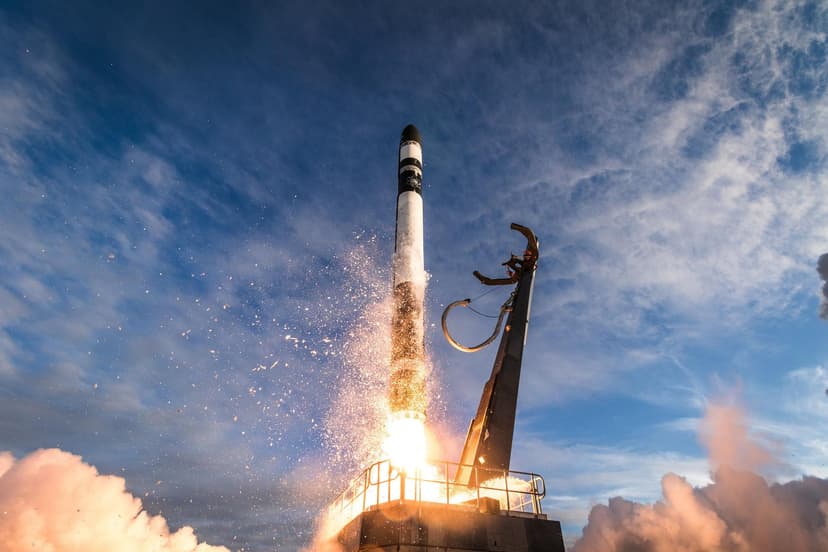
Electron | The Mountain God Rises (iQPS Launch 10)
Launch by Rocket Lab. Synthetic aperture radar Earth observation satellite for Japanese Earth imaging company iQPS. From Rocket Lab Launch Complex 1, Mahia Peninsula, New Zealand.