
Kinetica 2 | SpaceSail Polar Group TBD?
Initial constellation will consist of 1296 satellites by 2027 with long term plans to expand it to 12000 satellites. From Jiuquan Satellite Launch Center, People's Republic of China.
Countdown Timer - Kinetica 2 | SpaceSail Polar Group TBD?
As we approach this groundbreaking event, our countdown timer will keep you updated on every second leading up to this significant launch from the Jiuquan Satellite Launch Center in the People's Republic of China. Join us in tracking this thrilling countdown and discover the potential of advanced satellite technology!
Frequently Asked Questions
There are exactly 4 days left until Kinetica 2 | SpaceSail Polar Group TBD?, which is 112 hours or 6760 minutes.
Kinetica 2 | SpaceSail Polar Group TBD? will take place on Tuesday, November 3, 2026 at 12:10 AM.
Use our real-time countdown to precisely track the time remaining until Kinetica 2 | SpaceSail Polar Group TBD?.
Click “Embed” under the countdown and copy the code or link: the Kinetica 2 | SpaceSail Polar Group TBD? countdown widget works on any website, blog, Notion page or OBS stream, updates live and is free, with no sign-up.
Space articles
All articles →
Related countdowns
See more space
US EVA-100
NASA astronaut Anil Menon and CSA astronaut Joshua Kutryk will exit the station’s Quest airlock to install and deploy an International Space Station Roll-Out Solar Array (IROSA) on the 2A electrical power channel. The solar array will be the seventh IROSA and will provide additional power to support critical station operations, including its safe and controlled deorbit. Location: International Space Station.

GSLV Mk II | IRNSS-1L (NVS-03)
Launch by Indian Space Research Organization. This is a replacement satellite for the Indian Regional Navigation Satellite System. The constellation will provide India with an alternative to GPS and will be used for military and civilian use. Located at a geosynchronous orbit, the system will be operated by the Indian government. From Satish Dhawan Space Centre, India.

RS-25 Engine Test
NASA is conducting a hot fire of an RS-25 engine as part of certification testing for future SLS (Space Launch System) rockets. The test of developmental RS-25 engine No. 10001 is planned to run for almost eight-and-a-half minutes (500 seconds) and throttle up to 111% of its rated power level. Location: Fred Haise Test Stand, NASA’s Stennis Space Center.
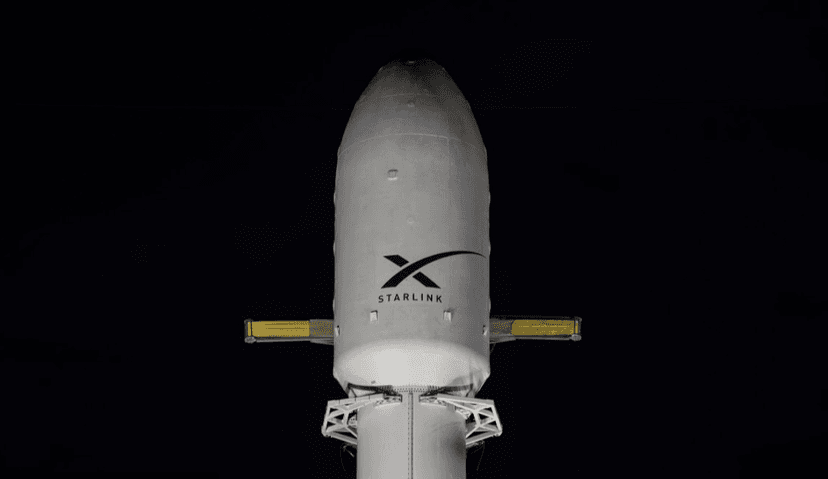
Falcon 9 Block 5 | Starlink Group 15-18
Launch by SpaceX. A batch of 27 satellites for the Starlink mega-constellation - SpaceX's project for space-based Internet communication system. From Vandenberg SFB, CA, USA.

Falcon 9 Block 5 | USSF-432
Launch by SpaceX. A classified mission for the United States Space Force. It is possibly a batch of classified LEO satellites based on SpaceX’s Starshield satellite bus, based on locations of rocket stage drop zones being exact fits with previous Starlink Group 15 launches. From Vandenberg SFB, CA, USA.
US EVA-101
NASA astronaut Anil Menon and CSA astronaut Joshua Kutryk will install and deploy the eighth and final IROSA on the 3B channel of the space station, completing the power augmentation upgrades. The final two roll-out solar arrays will complete the space station’s power system augmentation. Together, the eight roll-out arrays will increase available power by up to 30%, boosting the station’s electric power generation capacity from 160 kilowatts to approximately 215 kilowatts. Location: Internat